How Long Does It Take to Install an EV Charger
The short answer
The installation itself takes two to four hours for a standard Level 2 charger in a home with panel capacity to spare. End to end, allow one to two weeks from approving the quote, because permit review, not labor, sets the calendar. A service upgrade adds six to eight hours of work, usually on a separate day.
If you recently bought an electric vehicle, you probably feel a mix of excitement and mild anxiety. The excitement comes from quiet acceleration and lower running costs. The anxiety usually arrives the first time you notice the Level 1 cord in the trunk adds only three to five miles of range per hour.
That is the moment most Colorado homeowners start looking into a home charger and asking how long the whole thing takes. The honest answer has two parts: the work is quick, and the paperwork is what you actually wait on.
The full timeline, start to finish
Here is how a typical Colorado project runs, with realistic durations for each stage.
| Stage | How long | What happens |
|---|---|---|
| 1. Assessment | About 30 minutes | Panel inspected, load calculation run, charger position agreed, written price issued |
| 2. Permit review | 1 to 7 days | Application filed with your city or county. This is usually the longest wait |
| 3. Installation day | 2 to 4 hours | Circuit run, charger mounted and terminated, system tested against your vehicle |
| 4. Inspection | A few days after | City inspector signs off and the permit closes. You can charge before this |
| Total, standard job | 1 to 2 weeks | Add a day of work and a second inspection if a service upgrade is required |
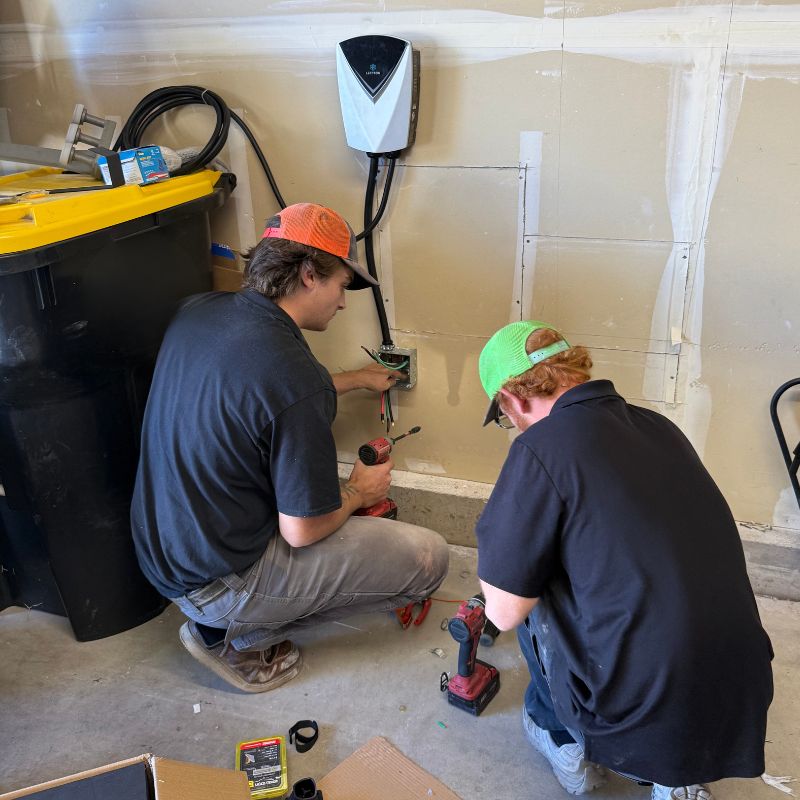
The pattern worth noticing: roughly three hours of that is someone in your garage. Everything else is waiting on a municipal queue, which is why we file the permit the moment you approve the quote rather than the week of the install.
What affects EV charger installation time
Five variables move the schedule. Two are visible on day one, three only surface once an electrician opens the panel.
Condition of the electrical panel
The panel is the first and most important variable. A Level 2 charger needs a dedicated circuit, enough available amperage, and a free breaker slot. A modern 200 amp panel with open slots means installation moves quickly. An older panel that is full, or already serving heavy loads, may need a service upgrade first, which adds a permit, a separate inspection, and a full panel replacement.
That step takes longer but improves capacity for everything that comes after it, whether that is a hot tub, a heat pump, or a second EV.
Location of the charger
The distance and route between panel and charger drive the labor hours. A wall mount a few feet from the panel is fast. Running conduit across a finished garage, up a wall, through an attic, or out to a detached structure adds time, and finished surfaces that must be opened and patched add more.
Charger amperage
Level 2 units are not interchangeable. A 48 amp charger needs heavier conductors and a 60 amp circuit, where a 32 amp unit runs on 40 amps. Higher amperage means more detailed load calculations, careful conductor sizing, and additional time verifying the system stays within safe limits.
Permits and inspections
Most Colorado jurisdictions require an electrical permit for a Level 2 installation, and review timelines vary by city. Denver, Aurora, Lakewood, Boulder, and Colorado Springs each run separate building departments with their own queues. After the work, a local inspector verifies compliance with the National Electrical Code and any local amendments.
Condition of existing wiring
Old conductors, damaged cable, or loose connections inside a junction box slow things down, because they get corrected before the job is signed off. That is not padding. Leaving a loose neutral or a compromised splice upstream of a new continuous load is how you end up with a fault six months later.
What happens on installation day
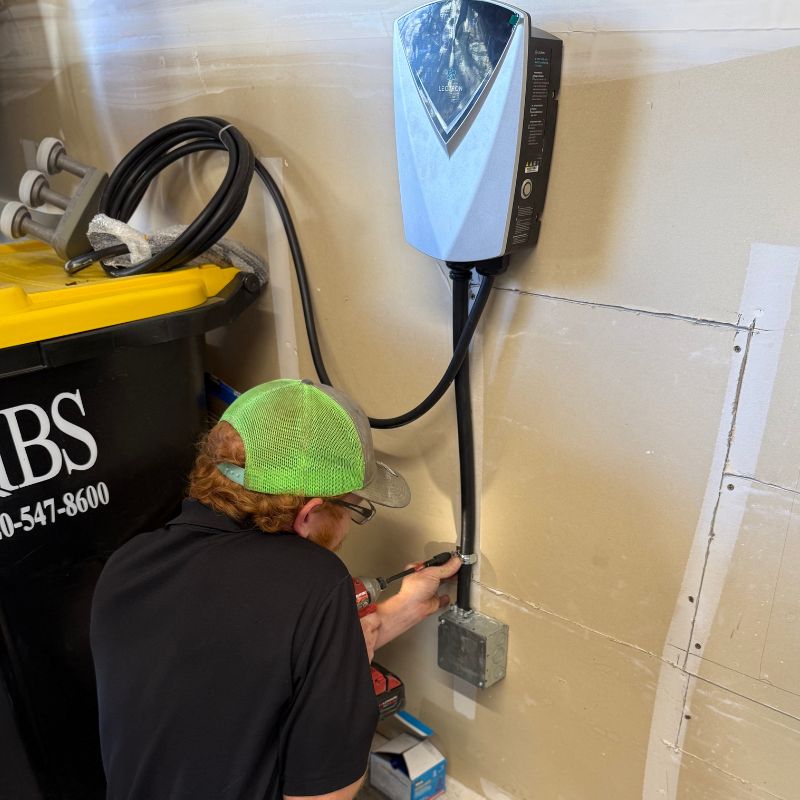
A standard Level 2 installation takes two to four hours on site. The sequence is consistent:
- Preparing the work area and protecting nearby surfaces
- Mounting the charger on the wall or a pedestal
- Running conduit along the agreed route
- Pulling conductors from the panel to the charger position
- Making connections at both the panel and the unit
- Testing the circuit with instruments, then against your actual vehicle
Testing against the car matters more than it sounds. A circuit that reads correct at the breaker can still fail to negotiate full charge rate with the vehicle, and that is worth finding while the electrician is still standing there.
The job runs longer when drywall has to be opened and patched, when the route is long or awkward, when two chargers go in for a two EV household, or when load management equipment is added. A panel upgrade typically takes six to eight hours and is usually scheduled on its own day.
The 80 percent rule, and why it affects your circuit
The 80 percent rule comes from the National Electrical Code. Continuous loads, meaning anything drawing steadily for three hours or more, must not exceed 80 percent of a circuit’s rated capacity. EV chargers run for hours at a stretch, so they qualify.
In practice, a 50 amp circuit safely supplies 40 amps continuously, and a 60 amp circuit supports a 48 amp charger. The margin keeps conductors, terminations, and the breaker within safe operating temperatures, and it is the reason a charger cannot simply be matched to the nearest available breaker size. Electricians who install EV equipment regularly size to this by habit.
Does the charger brand change the timeline?
Rarely. A Tesla Wall Connector installs in about the same time as a ChargePoint, Emporia, or other Level 2 unit. What actually varies is amperage and wiring requirement, mounting and cable management preference, and whether the unit needs network setup for scheduled charging. If you are still choosing hardware, see our guide to the best home EV chargers in Colorado.
Permit timelines in Colorado
Because a Level 2 installation adds a dedicated circuit and increases your home’s connected load, most Colorado jurisdictions require an electrical permit. The permit confirms the installation meets the NEC and local amendments, confirms your service can support the charger, and creates documentation that matters for insurance and for any future sale of the home.
Most Colorado cities and counties issue EV charger permits within one to seven days, with inspections following shortly after installation. GO EV Colorado files the application, schedules the inspection, and attends it, so none of that lands on you.
Why the installer you pick changes the schedule
Any licensed electrician may legally install an EV charger. Doing it quickly and correctly is a different question, and it is worth reading whether any electrician can install an EV charger before you choose.
The delays we get called in to fix usually trace to the same causes: a load calculation done by eye rather than to standard, a circuit sized without the 80 percent margin, a permit filed late or in the wrong jurisdiction, or an inspection failed on a detail that adds a fortnight to the project. GO EV Colorado installs EV charging equipment every working day across the Denver metro and the Front Range, which is why our jobs generally pass on the first inspection.
Frequently asked questions
How long does an EV charger install take?Most home Level 2 installations take two to four hours once the electrician is on site, assuming the panel has capacity and a free breaker slot and the charger sits reasonably close to it. End to end, including permit review and inspection, allow one to two weeks. |
How long does it take an electrician to install an EV charger?A licensed electrician completes a standard installation within a few hours. Long conduit runs, service upgrades, or additional load management equipment extend that. A panel upgrade alone runs six to eight hours. |
What is the 80 percent rule for EV charging?The National Electrical Code requires that continuous loads not exceed 80 percent of a circuit’s rated capacity. EV chargers run for hours at a time and count as continuous, so a 50 amp circuit supplies 40 amps continuously and a 48 amp charger needs a 60 amp circuit. |
Do you need a permit for EV charger installation in Colorado?In nearly all cases, yes. Most Level 2 installations in Colorado require an electrical permit and a final inspection. GO EV Colorado handles the application, the scheduling, and the inspection itself. |
How long does it take to get an EV charger permit in Colorado?Most Colorado cities and counties issue EV charger permits within one to seven days, though timelines vary by municipality and current workload. Filing immediately after quote approval is what keeps the overall project inside two weeks. |
Can I use the charger before the inspection?Yes. The circuit is complete, tested, and safe to use once the installation is finished. The inspection closes the permit and creates the record, which is what protects your insurance position and answers a buyer’s inspector later. |
The bottom line
Installing a Level 2 charger is one of the most worthwhile upgrades an EV owner can make, and the work itself is genuinely quick. Plan around the permit rather than the labor, get the load calculation done properly at the start, and the whole project fits comfortably inside a fortnight.
If you want the full process explained before you book, read our EV charger installation guide or the current cost ranges for Colorado. Utility rebates are covered in how to claim EV charger rebates in Colorado.
Electrical work beyond EV charging
EV charging is all we do. For whole home rewiring, standby generators, lighting, or emergency electrical service across the Front Range, our partner The Electricians covers the rest.