Tesla Wall Connector Installation Guide
The short answer
A Tesla Wall Connector is normally wired to a 60 amp circuit delivering 48 amps, which adds up to 44 miles of range per hour. That needs 6 AWG copper conductors and enough spare capacity in your panel. Installation takes two to four hours, requires a permit and inspection in every Colorado jurisdiction, and typically runs $650 to $1,600 for a straightforward job.
Colorado homeowners take to Teslas easily. They are quick, quiet, cheap to run, and they handle mountain highways better than most petrol cars ever did.
If you have just bought one, or you are finally done with slow charging, the question is whether to install a Tesla Wall Connector at home and what that actually involves. This guide covers the electrical requirements, the installation steps, the real cost in Colorado, and the questions Tesla owners ask most.
GO EV Colorado is a Tesla Certified installer, and Wall Connectors are among the most common jobs we do across the Denver metro and the Front Range.
Why install a Tesla Wall Connector?
A Tesla will charge from a standard household outlet, but slowly. Think of filling a swimming pool with a garden hose. You get there eventually, with time to take up a hobby while you wait.
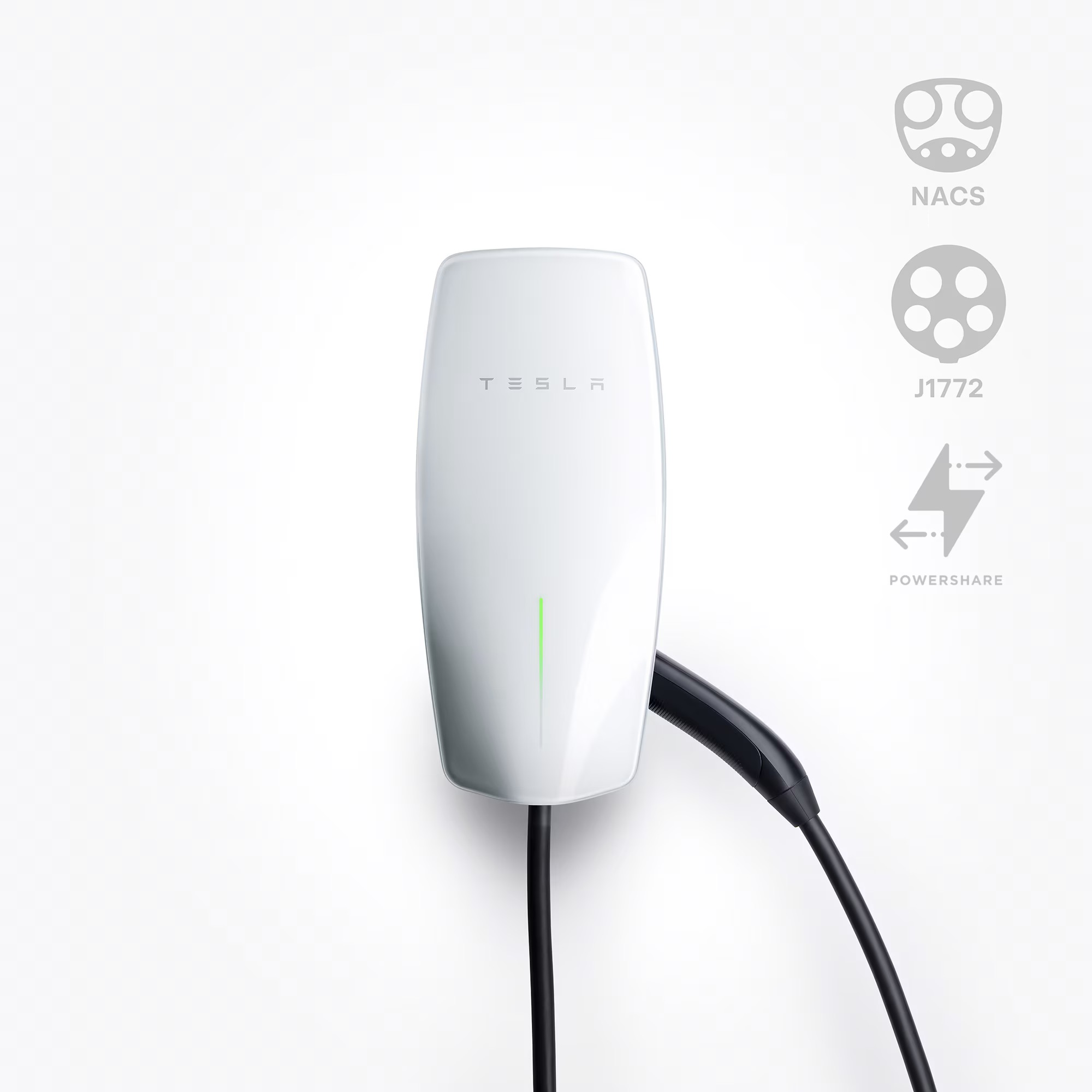
A Wall Connector changes that. The advantages worth knowing about:
- Up to 44 miles of range added per hour, depending on the model and circuit
- Power management built into the unit
- Hardwired rather than plug connected, which is more reliable over years of daily cycling
- Load sharing across multiple Wall Connectors for two car households
- Scheduling and monitoring through the Tesla app
- Eligible for Colorado utility rebates, which Level 1 charging is not
For Colorado drivers specifically, cold weather is the argument that usually settles it. Low temperatures reduce effective range and slow the rate a pack will accept, so the trickle from a wall outlet stops keeping up right when you need it most.
Is it okay to charge a Tesla from a regular outlet?
Technically yes. Tesla includes a mobile connector that plugs into a standard 120 volt outlet. But that setup adds only three to five miles of range per hour, which means a thirty mile commute takes six to ten hours to recover, a full charge takes most of two to three days, and cold weather slows it further.
There is also a practical caution. A mobile connector draws a continuous load for hours, and most household outlets sit on general purpose circuits never designed for that duty cycle. If you charge this way daily, use a dedicated outlet on a healthy circuit, never an extension lead.
It is fine as a stopgap. For daily use, a Level 2 charger is the better answer.
Tesla Wall Connector electrical requirements
Is a Tesla charger 50 amp or 60 amp?
The Wall Connector can be configured across a range of amperages. The most common and the fastest is a 60 amp circuit delivering 48 amps to the vehicle. It also supports 15, 20, 30, 40, and 50 amp circuits depending on what your panel can carry.
The gap between the circuit rating and the delivered current is not waste. The National Electrical Code treats EV charging as a continuous load, so the draw cannot exceed 80 percent of the circuit rating. That is why 48 amps needs 60, and 40 amps needs 50.
Where the panel supports it, we recommend the 60 amp configuration, because it gives the fastest charge rate the vehicle can safely accept and leaves nothing on the table.
What gauge wire does a Tesla Wall Connector need?
| Circuit | Delivered to vehicle | Typical conductor |
|---|---|---|
| 60 amp | 48 amps | 6 AWG copper, or 4 AWG aluminium |
| 50 amp | 40 amps | 6 AWG copper |
| 40 amp | 32 amps | 8 AWG copper |
Copper is generally preferred. It handles heat better and holds terminations more reliably over time, which matters in outdoor and cold climate installations. Long runs are the exception worth flagging: past roughly a hundred feet, voltage drop can require going up a size regardless of the amperage table, and that is a calculation rather than a guess.
Your GO EV Colorado electrician evaluates the panel, runs the load calculation, and sizes conductors for distance, amperage, and local code.
The Tesla Wall Connector installation process
| 01 |
Free estimate and electrical evaluationWe review panel capacity, available breaker space, the charger position you want, the distance from the panel, the age of existing wiring, and weather exposure if the unit is going outside. Most homes support a Wall Connector with minimal work. Some need a subpanel or a service upgrade first. |
| 02 |
Load calculation and permit filingColorado enforces electrical code closely, and a licensed electrician must perform the load calculation that confirms your panel can carry the new circuit without compromising existing appliances. We file the permit, communicate with the local inspector, and prepare HOA documentation where a board requires it. |
| 03 |
Dedicated 240 volt circuit installedA new breaker sized for your chosen charge rate goes into the panel, conductors run to the Wall Connector position through conduit or concealed where possible, the unit is mounted and terminated, grounding is verified, and outdoor installations are weatherproofed. If the panel is full or outdated, panel replacement, a subpanel, or a service and meter upgrade happens at this stage. |
| 04 |
Testing and Tesla app setupWe test voltage, confirm the delivered amperage matches the configuration, run diagnostics, connect the unit to your home network, help you set charging schedules in the Tesla app, and configure power sharing if you are running more than one Wall Connector. |
| 05 |
Final inspectionColorado jurisdictions require an inspection confirming the work meets the National Electrical Code. We schedule it and attend it. Once it passes, the permit closes and you hold the record that protects your insurance position and answers a buyer’s inspector later. |
What does Tesla Wall Connector installation cost in Colorado?
Wall Connector jobs sit at the upper end of Level 2 pricing, and for a good reason. Running 48 amps needs a 60 amp circuit and 6 AWG copper, which costs more in materials and takes more panel headroom than a 32 amp unit on lighter conductors. You are paying for the charge rate.
| Scenario | Typical range | When it applies |
|---|---|---|
| Straightforward | $650 to $1,600 | Panel near the charger position, short run, capacity available, indoor mount |
| Complex routing | $1,600 to $2,500 | Long conduit runs, finished walls opened and patched, outdoor weather rated mounting |
| Detached garage or trenching | Add $500 to $2,000 | Underground conduit, driveway crossings, pedestal mounting |
| Service upgrade required | $1,500 to $4,500 | Older homes, 100 amp panels at capacity, meter or service mast work |
| Permit and inspection | Included in our quote | We pull it, pay it, and attend the inspection |
The variables that move the number are distance from panel to charger, whether walls are finished, indoor against outdoor, existing capacity, and whether an upgrade is needed. Full detail sits in our EV charger installation cost guide, and every estimate we give is free and written before work starts.
Rebates for Tesla Wall Connector installation
Worth being precise here, because a lot of published guidance is out of date. The federal 30C tax credit ended for equipment placed in service after June 30, 2026, per IRS guidance, and Colorado has never had a statewide tax credit for charging equipment.
What remains is utility money. Xcel Energy offers up to $500 toward wiring and equipment, rising to $1,300 for income qualified customers, with off peak enrollment required. Holy Cross Energy, Black Hills Energy, United Power, and other cooperatives run their own. One catch specific to Wall Connectors: some programs require an ENERGY STAR certified or networked unit, so eligibility should be confirmed before you settle on hardware. Details are in how to claim EV charger rebates in Colorado.
Tesla charging questions from Colorado homeowners
Is it okay to charge a Tesla with a regular outlet?Yes, but slowly. Level 1 charging adds three to five miles of range per hour, so a full charge takes most of two to three days. Most Colorado owners upgrade once winter reduces effective range and the trickle stops keeping up. |
Are Tesla chargers 50 amp or 60 amp?The Wall Connector supports several configurations, but the preferred setup is a 60 amp circuit delivering 48 amps, which is the maximum the unit provides. Lower amperages are used where panel capacity is limited. |
What gauge wire is needed for a Tesla Wall Connector?6 AWG copper is typical for 50 and 60 amp circuits, and 8 AWG copper for a 40 amp circuit. Runs beyond roughly a hundred feet may need a larger conductor to control voltage drop. Your electrician determines the exact size from distance and code. |
How much does it cost to install a Tesla Wall Connector?A straightforward installation runs about $650 to $1,600. Complex routing pushes it toward $2,500, and a service upgrade adds $1,500 to $4,500. Wall Connectors sit above the cheapest Level 2 installs because 48 amp charging requires heavier conductors. |
Can a Tesla Wall Connector be installed outdoors in Colorado?Yes. The Wall Connector is weather rated for outdoor mounting and performs reliably through snow and freezing temperatures with proper conduit, weatherproofed terminations, and placement clear of downspouts and snowmelt. |
Do I need a panel upgrade for a Tesla charger?Not always. Many homes already carry capacity for a 60 amp circuit. Where they do not, dropping to a 40 or 50 amp configuration sometimes avoids an upgrade entirely at a modest cost in charge rate. We run the load calculation during the estimate and tell you which applies. |
Why homeowners choose GO EV Colorado
A Wall Connector is not a do it yourself project. Colorado requires a licensed electrician and a permit, and the circuit is high amperage and continuous duty.
We are Tesla Certified, we install EV charging equipment every working day across the Front Range, we handle permits and inspections end to end, we quote in writing before starting, and we warranty our workmanship for five years.
Electrical work beyond EV charging
EV charging is all we do. For whole home rewiring, standby generators, lighting, or emergency electrical service across the Front Range, our partner The Electricians covers the rest.