EV Charger Installation Near Me
The short answer
A good EV charger installer will run a load calculation before quoting, pull the permit themselves, hold a Colorado electrical licence, and install Level 2 equipment regularly rather than occasionally. Anyone who tells you no permit is needed, or quotes a firm price without seeing your panel, should be ruled out immediately.
Installing a home EV charger is one of the best upgrades a Colorado homeowner can make. But the moment you search for EV charger installation near me, you learn something worth knowing: not all electricians are the same, and not all of them should be touching your charging circuit.
The installer you pick affects charging speed, long term reliability, and whether your electrical system handles Level 2 charging without tripping breakers every weekend. Colorado housing stock varies enormously in age and capacity, which makes experience matter more than most people expect.
This guide covers how to evaluate an installer, which certifications actually mean something, the red flags worth walking away from, and what the work should cost.
Why the right installer matters
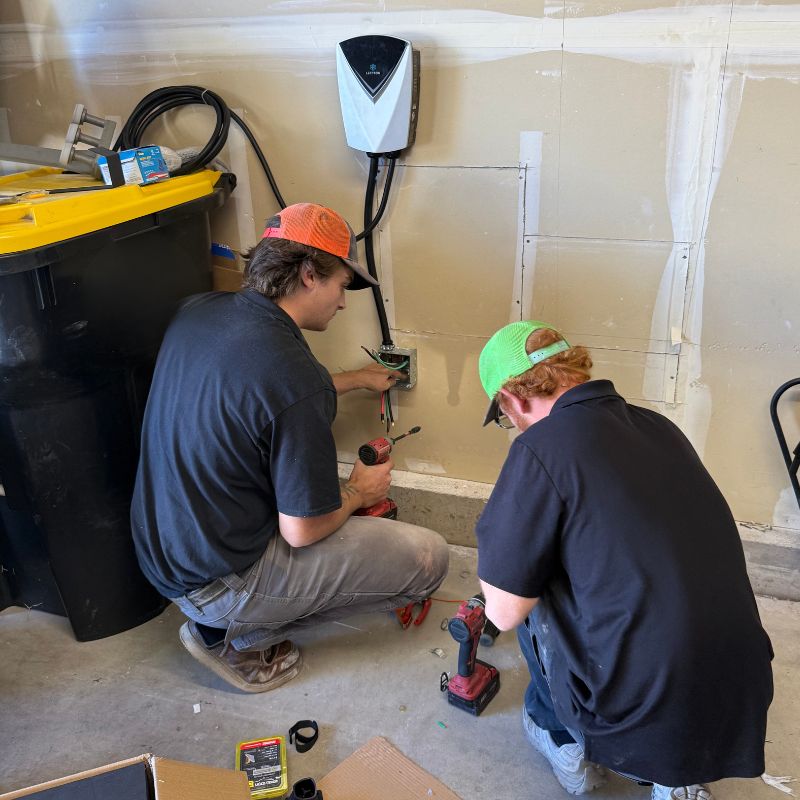
A Level 2 charger is not a new outlet in the garage. It is a dedicated high amperage circuit that needs a load calculation, correctly sized conductors, compliance with Colorado electrical code, and safe integration with an existing panel.
A qualified installer will verify whether your panel can support a forty to sixty amp charger, explain the difference between Tesla Wall Connectors, NACS, and J1772 equipment, handle permitting in your specific jurisdiction, install conduit suited to Colorado weather, and size the circuit to prevent nuisance tripping and overheating.
A less qualified one will say “yes, I can put that in.” Which is true. Whether it still works safely in ten years is a different question.
Step 1: Check licensing and certifications
Colorado licensing
Any electrician working on your charging circuit must hold a valid Colorado electrical licence and work under a registered electrical contractor. Anything less is unsafe, is not legal, and will usually void the charger manufacturer warranty. Ask to see it. A legitimate contractor will send it without hesitating.
Tesla certification
If you drive a Tesla, a Tesla Certified installer is worth seeking out. Certification reflects actual training on Wall Connector hardware, familiarity with NACS charging standards, faster fault diagnosis, and awareness of current Tesla hardware requirements. GO EV Colorado is a Tesla Certified installer.
Other brand experience
For a ChargePoint Home Flex, Wallbox, Emporia, or FLO unit, look for someone who has installed your specific model. Brand experience shows up in variable amperage configuration, smart charger setup, network and app pairing, load sharing between two vehicles, and knowing which units are rated for outdoor mounting. Our view on this is in can any electrician install an EV charger.
Step 2: Insist on a load calculation
Before any installation, your electrician should perform a load calculation to determine whether the home has capacity for Level 2 charging. If they skip it, that alone is grounds to keep looking.
A proper assessment covers the total amperage of your service, whether 100, 150, or 200 amps, the existing loads from HVAC, kitchen appliances, and anything like a hot tub, the capacity genuinely available for a forty or sixty amp charging circuit, and whether a service upgrade or load management device is needed. Homes built before the early 2000s frequently need one or the other to support a larger charger.
Step 3: Compare experience and specialisation
Search for EV charger installers in Colorado and you will find everything from general electricians to dedicated EV specialists. Both can be competent, but specialisation matters when the circuit is high amperage and continuous duty.
Ask how many Level 2 chargers they install in a typical month. A company doing dozens will give more consistent results than one that has done a handful. Ask which jurisdictions they work in regularly, because Denver, Boulder County, Jefferson County, and the surrounding municipalities each apply their own amendments, submission processes, and inspection requirements. Familiarity there is what prevents failed inspections and two week delays.
Step 4: Red flags worth walking away from
| “You do not need a permit.” | Every Level 2 installation in Colorado requires one. No exceptions. This single sentence should end the conversation. |
| No load calculation offered | Sizing a continuous forty to sixty amp load by eye is how you end up with tripping breakers or overheated terminations. |
| A firm price over the phone | Nobody can price this without seeing the panel and the route. A phone quote is usually revised upward on the day. |
| Cash only, no written scope | Without a written scope you have no warranty position and no record for a future buyer’s inspector. |
| A price far below everyone else | Usually it excludes the permit, the inspection, or the conduit, and those reappear later as change orders. |
Step 5: Know what it should cost
Cost varies with your panel, the distance to the charger position, and whether upgrades are needed. Here is the range Colorado homeowners should expect.
| Scenario | Typical range | When it applies |
|---|---|---|
| Straightforward install | $500 to $1,600 | Panel near the charger position, short run, capacity available, charger included |
| Complex routing | Up to $2,500 | Long conduit runs, finished walls opened and patched, outdoor weather rated mounting |
| Detached garage or trenching | Add $500 to $2,000 | Underground conduit, driveway crossings, pedestal mounted units |
| Service upgrade required | $1,500 to $4,500 | Older homes, 100 amp panels at capacity, full panel replacement |
| Permit and inspection | Included in our quote | Beware any quote that lists these separately or omits them |
Full detail is in our EV charger installation cost guide. Utility rebates can reduce these figures further, and we cover which ones still exist in how to claim EV charger rebates in Colorado.
Step 6: Indoor against outdoor installation
Colorado weather adds considerations that milder states do not have. Indoor mounting gives better protection from snow and ice, shorter cleaner conduit runs, and a longer service life for the unit.
Outdoor mounting is entirely workable but demands NEMA 3R or NEMA 4 rated equipment, UV resistant conduit, moisture protected terminations, and placement that avoids downspouts and snowmelt. If you are mounting outside, choose an electrician who has done it in Colorado conditions rather than one improvising.
Step 7: Seven questions to ask before hiring
- Are you a Tesla Certified or brand trained installer?
- Will you perform a load calculation before quoting?
- Do you pull the permit and attend the inspection?
- How many Level 2 chargers do you install in a typical month?
- What exactly is included in the written price?
- What warranty covers your labor, and for how long?
- How long will the installation take, start to finish?
A confident installer answers all seven without hesitating. Hesitation on any of them tells you what you need to know.
EV charger installation near you in Colorado
GO EV Colorado installs across the Denver metro and the Front Range, from Fort Collins down to Colorado Springs. Select your city for local permitting notes.
| Denver | Aurora | Lakewood | Centennial |
| Highlands Ranch | Littleton | Arvada | Boulder |
| Parker | Castle Rock | Fort Collins | Colorado Springs |
Frequently asked questions
Do I need a licensed electrician to install a Level 2 charger?Yes. Colorado requires a licensed electrician for all EV charger installations, and a homeowner cannot pull the permit for the work. Using an unlicensed installer also generally voids the charger manufacturer warranty. |
Is a permit always required?Yes, in effectively every Colorado jurisdiction. The permit protects your insurance position, creates a record for any future sale, and confirms the circuit was sized and installed correctly. Any installer who says otherwise should be ruled out. |
How do I find a good EV charger installer near me?Look for a Colorado licensed electrician who installs Level 2 equipment regularly, performs a load calculation before quoting, pulls the permit and attends the inspection, provides a written scope, and warranties their labor. Brand certification such as Tesla adds useful assurance on top. |
How long does installation take?Most installations take two to four hours on site, unless a service upgrade or trenching is required. End to end, including permit review and inspection, allow one to two weeks. |
Is it worth upgrading to a 200 amp panel?If you plan to add air conditioning, a hot tub, a heat pump, or a second EV, upgrading usually makes sense as a single piece of work rather than two. If none of those are on the horizon and the load calculation shows capacity, a load management device is often the cheaper route. |
Choosing your installer
A home EV charger is one of the better improvements a Colorado homeowner can make, but only when it is installed correctly. The right electrician protects the house, delivers the charge rate you paid for, navigates local permitting, and tells you honestly when an upgrade is not necessary.
Whether you are fitting a Tesla Wall Connector, a ChargePoint Home Flex, or a universal Level 2 unit, the checks above are the ones that separate a clean permitted job from one you deal with again in three years.
Electrical work beyond EV charging
EV charging is all we do. For whole home rewiring, standby generators, lighting, or emergency electrical service across the Front Range, our partner The Electricians covers the rest.