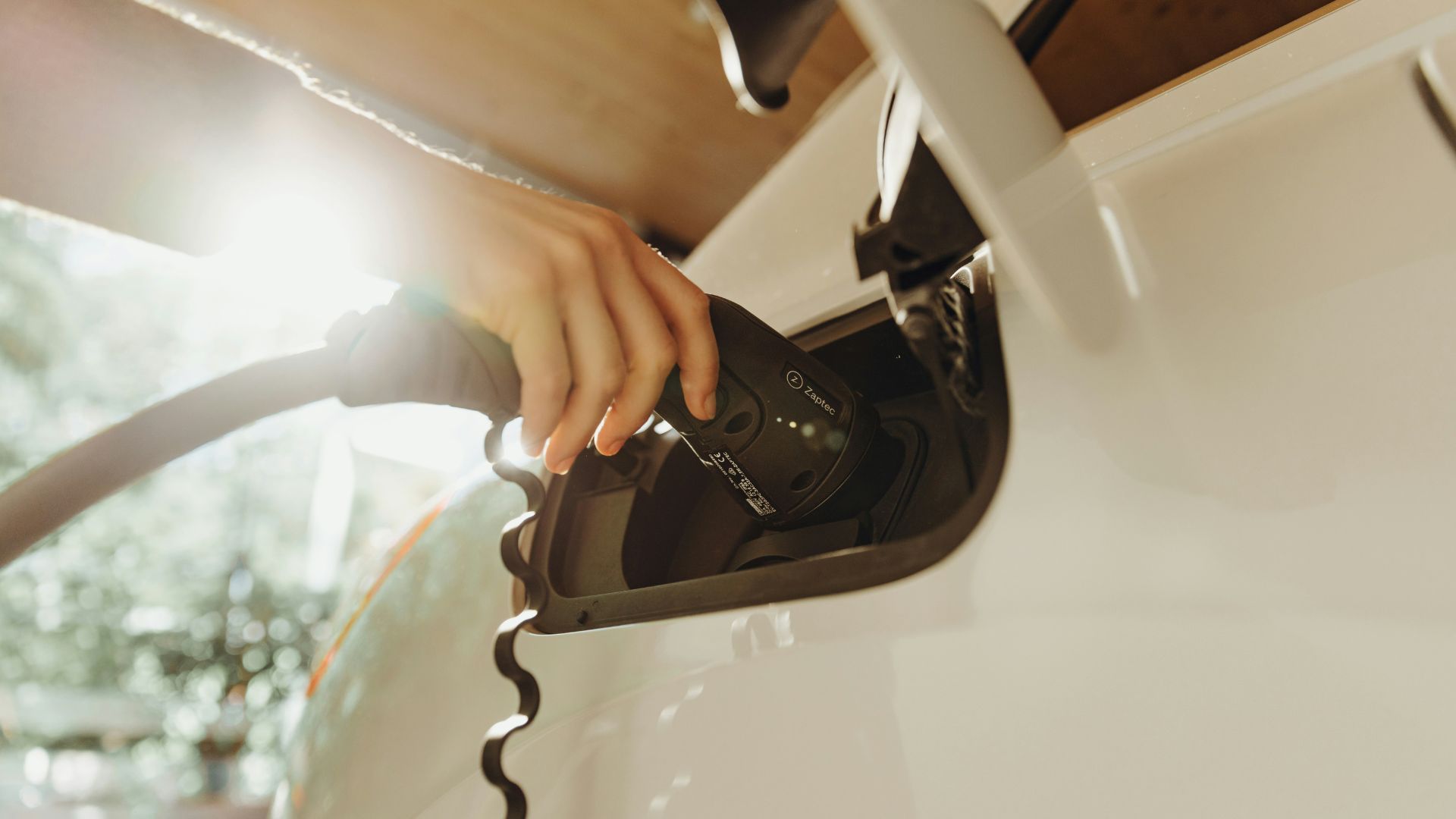
What is a NACS Charger?
What is a NACS Charger? The Future of EV Charging in Colorado
If you’re an EV driver or thinking about becoming one, you’ve probably heard chatter about the NACS charger.
The acronym stands for North American Charging Standard, and it’s quickly becoming the go-to plug for electric vehicles across the country.
Here in Colorado, where more homeowners are investing in EVs and home chargers, understanding NACS matters.
Is it the same as Tesla’s charger? Will you need an adapter? Should you choose NACS vs CCS for your home setup?
Let’s break it down, without frying your circuits.
What is NACS Charging?
The North American Charging Standard (NACS) is the connector design created by Tesla and now adopted by many major automakers.
Tesla owners have used this slim, user-friendly plug for over a decade.
Now Ford, GM, Rivian, Hyundai, and others are on board. Think of NACS as the “USB-C of EV charging”—sleek, universal, and quickly becoming the standard.
Unlike the bulkier CCS (Combined Charging System), NACS handles both AC and DC fast charging in one compact design.
In short: NACS charging is how your EV drinks up power—whether at home or on the road.
NACS vs CCS: Which is Better?
The debate is real, but here’s the straight answer:
- Ease of Use: NACS plugs are lighter and simpler than CCS. If you’ve tried plugging in a CCS cable during a Colorado snowstorm, you know why that matters.
- Network Access: Tesla’s Supercharger network—the largest in North America—runs on NACS. With more automakers adopting it, access is only expanding.
- Future Adoption: CCS won’t vanish overnight, but the industry momentum is firmly behind NACS.
Bottom line: If you’re investing in a home EV charger today, planning for NACS keeps you ahead of the curve.
What About J1772 Chargers?
If you’ve been researching EV charging, you’ve probably stumbled across the term J1772 (sometimes written as “J-plug”). This is the long-standing standard connector for Level 2 charging in North America—basically the outlet style used by most non-Tesla EVs up until recently.
Here’s the breakdown:
- Who uses it? Almost every non-Tesla EV sold in the U.S. from the last decade comes with a J1772 port for home and public Level 2 charging.
- Tesla compatibility: Teslas don’t have a J1772 port, but they come with a J1772-to-Tesla adapter, so you can still use most public Level 2 stations.
- Charging speed: J1772 is for AC charging only (Level 1 and Level 2). For DC fast charging, EVs with J1772 ports usually have an additional CCS connector.
- The future: With the rise of NACS, J1772’s role is shifting. Many newer cars will move directly to NACS ports, but for now, J1772 stations remain widespread and useful.
Think of J1772 as the reliable workhorse that got us here—kind of like that old microwave in your kitchen. It may not be the shiny new standard, but it still works and is everywhere.
What is a NACS Adapter Used For?
Adapters are the middlemen of the EV world. Until the industry fully transitions, you may need:
- NACS to CCS adapter: lets NACS cars use CCS stations.
- CCS to NACS adapter: lets CCS cars charge on Tesla’s Supercharger network.
The good news? As stations standardize, you’ll need fewer adapters (and maybe your junk drawer can finally rest).
Which Cars Have a NACS Plug?
Here’s where things stand:
- Already equipped: Tesla Model 3, Model Y, Model S, Model X.
- Transitioning: Ford, GM, Rivian, Volvo, Hyundai, Kia, Honda, Polestar, and more—most new models from 2025 onward.
- Still CCS (for now): Older non-Tesla EVs, which will likely offer adapters to bridge the gap.
So whether you drive a Tesla or a Ford F-150 Lightning, NACS is in your future.
Is NACS the Same as a Tesla Charger?
Yes and no.
- Yes: The NACS plug is Tesla’s connector design.
- No: NACS is now an open standard, not limited to Tesla. Automakers and charging companies across North America are adopting it.
So while Tesla started it, NACS is becoming the universal EV charging language.
Why Colorado Homeowners Should Care
Colorado EV adoption is booming. If you’re adding a Level 2 home EV charger, understanding NACS ensures your setup stays compatible for years.
At GO EV Colorado, we’re here to help homeowners make informed choices—whether that means installing a NACS-ready charger, upgrading your electrical panel, or connecting you with a licensed and Tesla-certified electrician near you.
When you future-proof your home charging, you save time, money, and a whole lot of adapter juggling.
FAQs About NACS Charging
1. Is CCS or NACS better?
NACS is winning for convenience and adoption, though CCS still works today.
2. What is a NACS adapter used for?
It bridges NACS cars to CCS chargers, or CCS cars to NACS chargers.
3. Which cars have a NACS plug?
All Teslas plus many new Ford, GM, and other automaker models starting in 2025.
4. Is NACS the same as a Tesla charger?
It’s Tesla’s design, but now it’s an open industry standard.
The Future of EV Charging in Colorado
The move toward NACS makes charging simpler and more universal.
Homeowners who get ahead of the transition will enjoy seamless charging—without worrying about whether their car and charger speak the same “language.”
At GO EV Colorado, we’re not just following the news—we’re helping lead the charge. From guides like this one to connecting you with trusted, certified installers, we make EV ownership easier across Colorado.
Schedule Your Free Estimate
Ready to install a NACS-ready charger at home? Don’t wait until adapters are scarce and charging lines are long.
👉 Schedule your free estimate today with GO EV Colorado and get connected to licensed, Tesla-certified electricians who will future-proof your home.