HOA EV charging Colorado
The short answer
Colorado law limits how far a homeowners association can restrict EV charging. Under C.R.S. 38-33.3-106.8, a residential association cannot prohibit a unit owner from installing a Level 1 or Level 2 charging system in their own unit, and must consent to installation in an assigned parking space, carport, or garage when the owner meets certain conditions.
Boards keep meaningful authority over safety, registration, and appearance. What they no longer have is a blanket no.
A situation Colorado boards are meeting more often: a resident submits a request to install an EV charger in their garage or assigned parking space. Some board members want to deny it. Others worry about setting a precedent. The resident has mentioned something about a state law.
The resident is usually right. Colorado has had specific protections for EV charging in common interest communities since 2013, and boards unfamiliar with them sometimes take positions they cannot defend.
This guide covers what the statute actually says, where boards still hold genuine authority, what an owner has to do in return, and why many Colorado communities conclude that a property wide charging programme resolves the problem better than approving requests one at a time.
This is a practical overview rather than legal advice. For a specific dispute, consult an attorney familiar with Colorado community association law.
What Colorado law says about HOAs and EV charging
Senate Bill 13-126 was signed in May 2013 and added to the Colorado Common Interest Ownership Act as C.R.S. 38-33.3-106.8, titled unreasonable restrictions on electric vehicle charging systems and electric vehicle parking.
The legislature was explicit about why. It found that most Colorado homes, including the large majority of new homes, sit inside common interest communities, and that the purpose of the section is to give residents a meaningful opportunity to use plug in vehicles rather than face artificial barriers to adopting them.
Note that the section applies to residential associations. Commercial associations are treated differently.
What a board cannot do
| Prohibit installation in the owner’s unit | An association cannot stop an owner installing, at their own expense and for their own use, a Level 1 or Level 2 charging system on or in their unit. In most single family and many townhome communities, the unit boundary includes the garage and driveway. |
| Charge a fee for the placement itself | No fee may be assessed simply for placing or using a charging system on the owner’s unit. The association may recover the actual cost of electricity it supplies, or charge a reasonable fee for access, and may include a network fee where the equipment sits on a paid network. |
| Restrict parking because the car is electric | Parking rules cannot single out a vehicle for being a plug in hybrid or a battery electric vehicle. |
Where the owner can install, and where it gets complicated
This is the part that causes most of the arguments, and it turns on how your community is structured.
Inside the unit. Straightforward. For most single family communities, and many attached home communities, the unit boundary includes the garage and driveway, so the charger goes in with minimal friction.
Limited common elements. This is the condominium case. An assigned or deeded parking space is usually a limited common element rather than part of the unit. The statute says the association shall consent to a charging system in a limited common element parking space, carport, or garage owned by or assigned to the owner, provided the system otherwise complies with the declaration, bylaws, and rules, and the owner meets the conditions below. That obligation applies notwithstanding any existing ban in the governing documents.
General common elements. Shared, unassigned parking is excluded from the mandate. An association is not required to permit an individual owner to install charging in general common element parking. This is exactly where a property wide programme becomes the sensible route, because individual rights do not reach that far and the demand does not disappear.
What the owner has to do in return
The protection is not unconditional. Where an owner is installing in a limited common element, the statute sets out obligations they must accept.
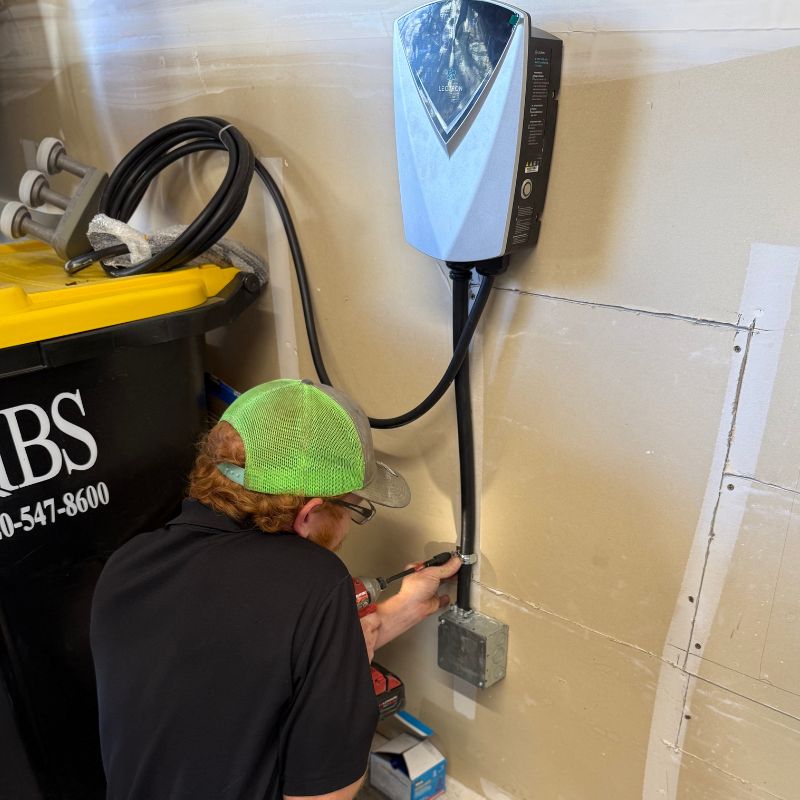
- Use a licensed and registered electrical contractor familiar with the installation and code requirements for EV charging systems. The statute names this specifically.
- Bear the full expense of installation, including the cost of restoring any common elements disturbed during the work.
- Comply with the governing documents in all other respects, including reasonable design and placement rules.
- Carry insurance and register the system where the association requires it, discussed below.
That first condition matters for boards. The law does not merely permit an association to insist on a qualified contractor. It builds the requirement into the owner’s obligations, which gives a board a legitimate basis for asking who is doing the work before approving anything.
What a board can still require
Boards frequently assume the law stripped their authority entirely. It did not. An association may still impose bona fide safety requirements consistent with an applicable building code or recognised safety standard, require the charging system to be registered with the association within thirty days of installation, and apply reasonable aesthetic requirements covering placement, conduit routing, and appearance.
The word doing the work throughout the statute is unreasonable. A board can regulate. What it cannot do is regulate so heavily that the practical effect is a prohibition, or apply conditions that significantly increase the cost or reduce the performance of the system.
Sensible boards write this down in advance. A short, published EV charging policy covering approved mounting positions, conduit standards, the registration process, insurance thresholds, and contractor qualification turns an argument into a form. It also means every installation in the community meets the same standard rather than reflecting whichever electrician each owner happened to call.
Why a property wide programme usually beats one at a time
Approving individual requests works until there are enough of them. Then the problems arrive together.
Each owner brings a different contractor, so conduit runs, equipment, and mounting standards diverge across the property. Each installation draws separately from a shared electrical service that nobody has assessed as a whole, and at some point one of them will be the request that pushes the building past its capacity. Billing gets messy, because electricity drawn from a common meter has to be attributed to somebody. And individual resident installations generally cannot access the grant funding that a coordinated property project can.
A property wide programme addresses all four. One load study across the building, one design standard, one permit process, one contractor, metering that attributes usage correctly, and infrastructure sized so the next ten requests are a connection rather than a new project.
It also changes the board’s position from reactive to in control. Communities that get ahead of this decide where chargers go. Communities that do not have it decided for them, one request at a time.
Funding for multifamily and HOA charging
This is where the money genuinely is, and it is worth knowing that the legislature anticipated it. The same statute encourages associations not only to permit charging but to apply for grants or otherwise fund installation on common property as an amenity for residents and guests.
Charge Ahead Colorado is the programme most often relevant. It funds a substantial share of qualifying multifamily, workplace, and publicly accessible charging projects, and it runs in application rounds through the year. Note the contrast with residential rebates: an individual homeowner cannot apply to Charge Ahead, but a property can.
Xcel Energy funds commercial and multifamily charging ports, with higher amounts available in Disproportionately Impacted Communities. Several cooperatives run their own commercial programmes. Colorado also exempts EV charging stations from property tax until January 1, 2030.
Funding rounds and amounts change, and applications generally need a defined project scope before submission, which is a practical argument for doing the site assessment early rather than after a board vote. Our current summary of residential programmes is in how to claim EV charger rebates in Colorado.
Metering and billing residents
The statute permits an association to recover the actual cost of electricity it supplies, or to charge a reasonable access fee, and to pass through a network fee where one applies. Turning that permission into something workable is an equipment decision made at design time.
Networked chargers track usage per session and per user, which allows accurate attribution and simple monthly reconciliation. Non networked equipment is cheaper to buy and harder to bill against, which is why properties that choose it on price often end up absorbing the electricity cost or arguing about it. If residents will be billed, that decision belongs in the specification rather than in a conversation six months after installation.
What about renters?
Different situation. The protections in the Common Interest Ownership Act run to unit owners, not tenants. A renter needs the landlord’s written approval before installing any charging equipment, and no state protection makes installation without permission lawful.
Colorado does place related obligations on landlords, so a tenant request is not automatically a dead end, but the route runs through the lease and the property owner rather than the association. Renters in a community with a property wide charging amenity are usually far better served than those pursuing an individual installation.
Frequently asked questions
Can my HOA stop me installing an EV charger in Colorado?Generally no, where the installation is in your own unit or in a parking space, carport, or garage assigned to you. Under C.R.S. 38-33.3-106.8 a residential association cannot prohibit a Level 1 or Level 2 charging system installed at your expense for your own use, and must consent to installation in an assigned limited common element when you meet the statutory conditions. Shared unassigned parking is treated differently. |
Can the HOA charge me a fee for having a charger?Not for the placement or use itself. The association may recover the actual cost of electricity it provides, or charge a reasonable fee for access, and may pass through a network fee where the equipment is on a paid network. A fee simply for having installed a charger is not permitted. |
What conditions can a board legitimately impose?Bona fide safety requirements consistent with the building code or a recognised safety standard, registration of the system with the association within thirty days of installation, and reasonable aesthetic and placement rules. The board can also require that the work is done by a licensed and registered electrical contractor, because the statute makes that an owner obligation. |
Who pays for the installation?The owner, where it is an individual installation. That includes the cost of restoring any common elements disturbed during the work. Where the association installs charging on common property as an amenity, the association funds it, often with grant support. |
Can an HOA get funding for community charging?Yes. Charge Ahead Colorado funds qualifying multifamily and workplace charging projects, and Xcel Energy funds commercial ports with higher amounts in Disproportionately Impacted Communities. Individual homeowners cannot access these, which is one of the strongest arguments for a property wide approach. |
Does the law protect renters?The Common Interest Ownership Act protections run to unit owners rather than tenants. A renter needs written landlord approval before installing charging equipment. Colorado places related obligations on landlords, but no state law permits installation without the property owner’s consent. |
Where GO EV Colorado fits
We work both sides of this. For unit owners, we handle the load assessment, the permit, and the installation to a standard that satisfies a board’s safety and aesthetic conditions, and we provide the contractor documentation an association is entitled to ask for.
For boards and property managers, we run the building wide electrical assessment, design infrastructure that scales past the first few requests, specify equipment that meters and bills correctly, scope projects for grant applications, and install across the Denver metro and the Front Range.
Electrical work beyond EV charging
EV charging is all we do. For whole home rewiring, standby generators, lighting, or emergency electrical service across the Front Range, our partner The Electricians covers the rest.